Vienna, Austria, 6–7 October 2026 – More than 200 registrants from more than 20 countries, 25 Project Ideas shared via pitches and/or posters, 13 SME Expertise pitches: the Xecs Matchmaking Event 2026 brought together the international Electronic Components and Systems (ECS) community for two days of exchanges, new connections and opportunities for collaborative innovation.
Held at the historic Palais Eschenbach in Vienna and organised by Xecs, the Eureka Cluster operated by AENEAS, this year’s edition combined matchmaking activities with dedicated workshops, practical insights from experienced project partners and a technology demonstration site visit.
With an extended two-day format, the event aimed not only to help participants identify partners for Xecs Call 6 and the first Xecs Thematic Quantum Call, but also to support them throughout the collaborative project journey, from developing an idea and building a consortium to project implementation, exploitation and impact.
Day 1: Connecting the ECS Community and Shaping Future Projects
 The event opened on 6 October with a welcome from Caroline Bedran, AENEAS Director General, followed by representatives of the Austrian host and innovation ecosystem.
Alexander Pogany, representing Austria’s Federal Ministry of Innovation, Mobility and Infrastructure, welcomed participants to Vienna, while Sonia Nour, Clusters Coordinator at the Eureka Secretariat, introduced the wider Eureka framework and the opportunities it offers for international R&D collaboration.
 Nadja Rohrbach, Xecs Director, then presented Xecs Call 6, outlining the call’s objectives, application process and opportunities for organisations seeking to develop ambitious, market-oriented collaborative projects.
With Xecs Call 6 open for applications, prospective participants are invited to submit their Project Outlines by 21 January 2027 (17:00 CET), followed by the Full Project Proposal deadline on 15 April 2027. The call offers an opportunity for organisations across the ECS value chain to join forces on innovative, market-oriented R&D projects with international partners. Further information on eligibility, participating countries and the application process is available on the Xecs Call 6 page.
Learning from Successful Xecs Projects
Before turning to new project ideas, participants had the opportunity to hear directly from organisations already involved in Xecs projects.
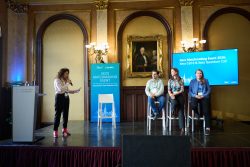 An interactive discussion brought together Amir Hossein Ghadimi from Lightium AG, leader of the INGENIOUS project; Birgit Brandstätter from BESI, partner in HyPACT; and Sarah van Drumpt from TNO, partner in Bio-curity. Drawing on their experiences, the speakers shared perspectives on international collaboration, project development and the practical realities of working within a transnational R&D consortium.
Their contributions provided valuable context for prospective applicants, illustrating how complementary expertise from different countries and organisations can come together around shared technological objectives.
Celebrating Innovation: The Xecs Innovation Award 2026
One of the highlights of the opening day was the presentation of the Xecs Innovation Award 2026 to the e²LEAD project, recognising its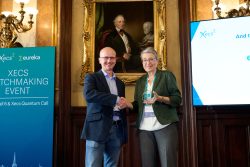 achievements in advanced packaging technologies for next-generation automotive computing platforms. The award was received by Przemyslaw Jakub Gromala of Robert Bosch Kft., e²LEAD Project Leader, on behalf of the international consortium.
Developed under Xecs Call 1, e²LEAD addresses key challenges associated with high-performance automotive computing, including connectivity, thermal management, power delivery and the integration of advanced semiconductor technologies. The project demonstrates the potential of international collaboration across the automotive and microelectronics value chains to deliver innovative technological solutions with industrial relevance.
Read more about the Xecs Innovation Award 2026
From Project Ideas to New Partnerships
Throughout the first day, the spotlight turned to future collaborative projects.
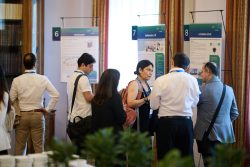 With 21 Project Idea pitches, 25 project posters and 13 SME Expertise pitches, participants had numerous opportunities to discover emerging technological concepts, introduce their organisations’ capabilities and identify potential partners.
The presentations covered a broad range of innovation areas within the ECS ecosystem, reflecting the diversity of expertise represented at the event.
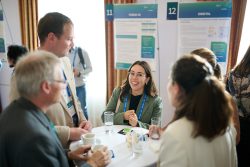 The dedicated Project Idea Exhibition provided an additional space for more detailed discussions, allowing participants to explore technological approaches, consortium needs and potential contributions beyond the short plenary pitches.
SMEs also took centre stage through dedicated expertise presentations, highlighting their specialised capabilities and potential roles within future international consortia.
A Dedicated Focus on Quantum Technologies
The afternoon programme introduced the first Xecs Thematic Quantum Call, presented by Patrick Cogez, AENEAS Technical Director.
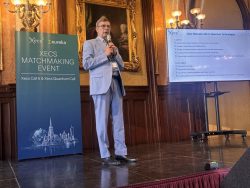 Designed to accelerate the industrialisation of quantum technologies, this new call supports international collaborative projects aiming to bridge the gap between research results and industrial applications. Dedicated Quantum Project Idea pitches offered participants the opportunity to present emerging concepts and identify complementary expertise in this rapidly developing field.
Prospective participants are invited to submit their Project Outlines by 26 November 2026, followed by the Full Project Proposal deadline on 5 March 2027. The call brings together organisations from participating countries to accelerate the industrialisation of quantum technologies through international, market-oriented collaborative R&D projects, supporting their progression towards industrial applications. Further information on eligibility, participating countries and the application process is available on the Xecs Calls page.
Turning Introductions into Meaningful Exchanges
Following the presentations, the programme moved into dedicated B2B matchmaking meetings and networking activities. These face-to-face discussions gave participants the opportunity to explore potential partnerships in greater depth, clarify project objectives, discuss consortium roles and identify the next steps towards collaborative proposals. The first day concluded with an evening networking reception, allowing conversations to continue in a more informal setting.
Day 2: Practical Insights into the Xecs Project Journey
While the first day focused on discovering ideas and connecting potential partners, the second day was designed to help participants move further towards developing and implementing successful collaborative projects.
Exploring Industrial Opportunities in Quantum Technologies
 The morning opened with a dedicated Quantum Workshop organised by the Austrian Research Promotion Agency (FFG). The session introduced available quantum-related services and featured insights into industrial developments in the field. A presentation on Infineon’s activities in quantum sensing explored the journey from semiconductor technologies to industrial applications, while a success story from ParityQC provided another perspective on the development of quantum technologies.
Together, these contributions illustrated the importance of connecting research, technological capabilities and industrial needs to accelerate progress in the quantum ecosystem.
From a Strong Proposal to Lasting Project Impact
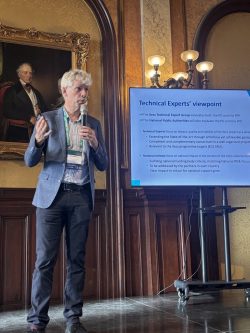 The programme continued with the Xecs Workshop, opened by Shéhérazade Azizi and Vincent Le Meau, Xecs Programme Managers.
Paul Merkus, Head of the Research Support Office at Eindhoven University of Technology, shared practical recommendations on preparing a successful Xecs project application, highlighting important considerations for prospective applicants.
The workshop then addressed three essential phases of the collaborative project lifecycle, with insights from experienced industry representatives:
- Building a consortium and a project proposal – Patrick Pype, NXP
- Kickstarting and running your Xecs project – Rosen Dimov, emotion3D
- Maximising project exploitation and impact – Marcel Dijkema, Sioux Technologies
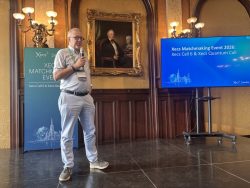
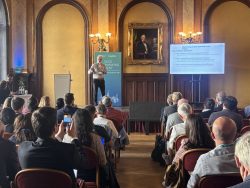 Beyond the presentations, participants were invited to exchange with the speakers and Xecs experts on the topics most relevant to their projects.
The discussions addressed practical challenges encountered at different stages of international R&D collaboration, from identifying the right partners and structuring a proposal to managing project activities and ensuring that results generate value beyond the project itself.
This interactive approach gave both newcomers and experienced project participants an opportunity to learn from real project experiences and discuss their own questions with the Xecs team.
Innovation in Action: A Visit to emotion3D’s Demonstration Lab
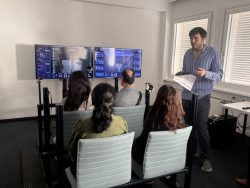 The event concluded with a site visit hosted by emotion3D, part of indie Semiconductor, offering participants a closer look at the development and real-world applications of innovative automotive technologies. Through an immersive automotive simulator experience, visitors discovered how advanced in-cabin perception technologies can support driver and occupant monitoring.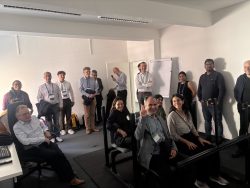
The demonstration showcased functionalities such as facial expression, gesture and body-point recognition, illustrating how intelligent sensing solutions can contribute to improved vehicle safety.
The visit provided a practical conclusion to two days of discussions, connecting the collaborative R&D opportunities explored during the event with technological developments and potential industrial applications.
A Growing International Community, Connected by Innovation
Beyond the presentations and workshops, the Xecs Matchmaking Event 2026 highlighted the value of bringing together a diverse international community. Representatives from large industry, SMEs, research and technology organisations, academia and Public Authorities joined newcomers to the Xecs ecosystem to exchange knowledge, discover complementary capabilities and explore opportunities for collaboration.
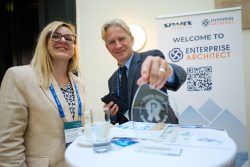 The event was made possible with the valuable support of Sparx Systems Europe and Peter Lieber, who hosted the Xecs community in Vienna, Forum Europe, responsible for event management and logistics, and FFG, which contributed to the programme through the dedicated Quantum Workshop.
Xecs and AENEAS organisation teram extend their sincere thanks to all speakers, project presenters, partners and participants for their contributions, as well as to the teams working behind the scenes to make the event possible.
Above all, the 2026 edition demonstrated that successful collaborative innovation begins with people: with the willingness to share ideas, combine expertise and work together towards common objectives.
As participants return to their organisations, the conversations initiated in Vienna can continue through the development of new consortia and project proposals, potentially becoming the next generation of Xecs collaborative R&D projects.
What’s Next? Xecs Calls Remain Open
Organisations interested in developing international collaborative R&D projects are encouraged to continue exploring partnerships and prepare their applications for the upcoming deadlines.
Xecs Call 6
- Project Outline deadline: 21 January 2027, 17:00 CET
- Full Project Proposal deadline: 15 April 2027, 17:00 CEST
Xecs Thematic Quantum Call
- Project Outline deadline: 26 November 2026, 17:00 CET
- Full Project Proposal deadline: 5 March 2027
Find out more information call process, eligibility criteria and funding countries on the Xecs Website.
The Xecs team remains available to guide prospective applicants throughout the process.
The conversations started in Vienna do not end here. We look forward to seeing how these new connections develop into the collaborative projects and innovations of tomorrow!